Futonji
Futonji
Japanese bedding sets, or futons, typically consist of a padded mattress and a quilted blanket. Traditionally, the blanket often incorporated a decorated cover that would have been made as part of a bride’s trousseau.
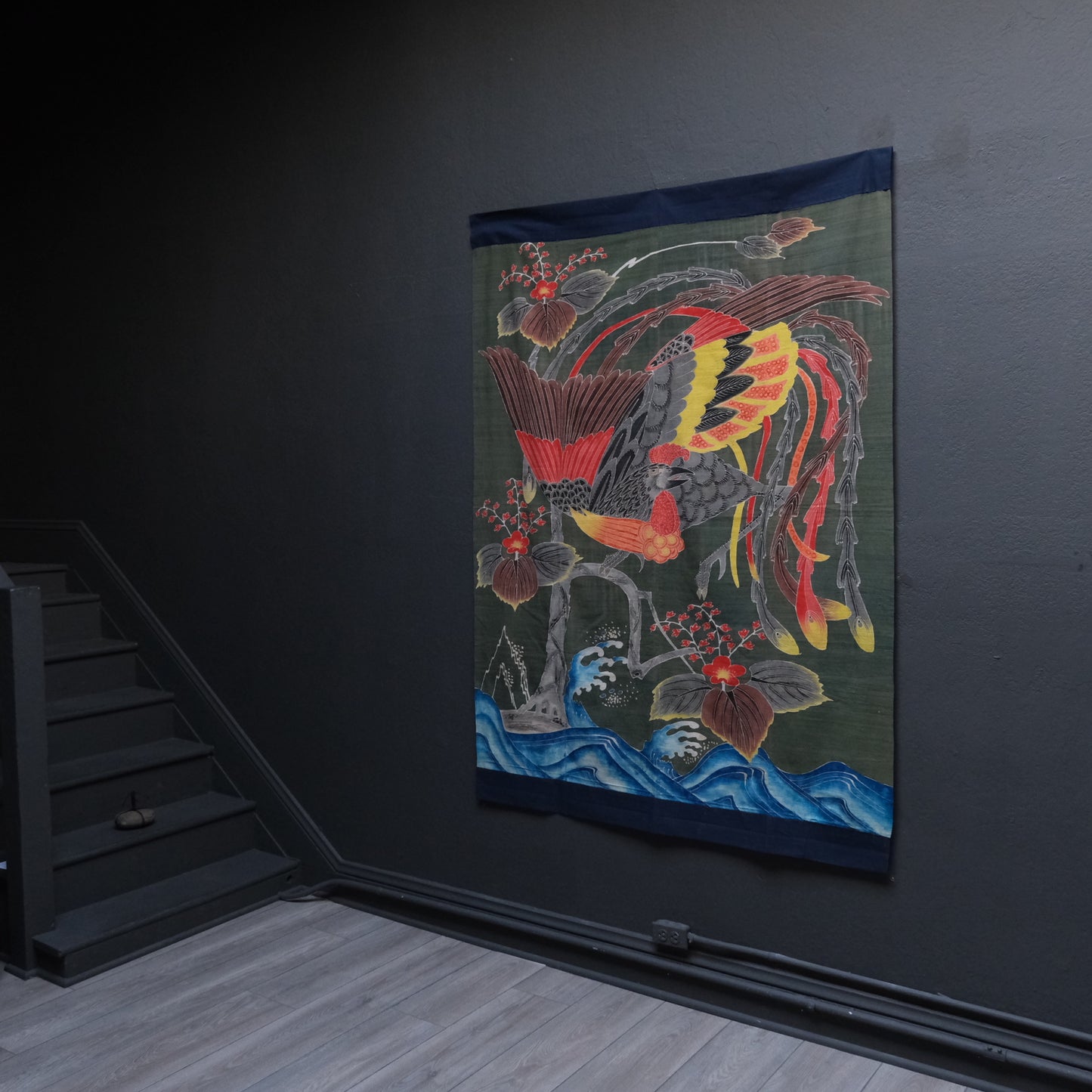
This example bears an elaborate pattern of a phoenix flying over a Paulownia tree. The combination of a phoenix with a Paulownia tree symbolizes peace, sincerity, and benevolence, appropriate attributes for a wedding textile. Unusually, this textile is made from raw silk rather than cotton.
Whereas some futonji are created using a stencil, this cover was created using tsutsugaki technique, where the artisan applied the starch resist freehand through a tube called a nori tsutsu. The application required significant artistic skill, particularly around the edges and when blending colors.
Even though this futonji likely dates to the late Meiji period (~1900) it is in exceptional condition, suggesting it was not used. I rarely see colors this bold on an antique textile.
Provenance: ex Linda Wrigglesworth, London, 1998
71x51 inches
Couldn't load pickup availability